Jessie Jarvis
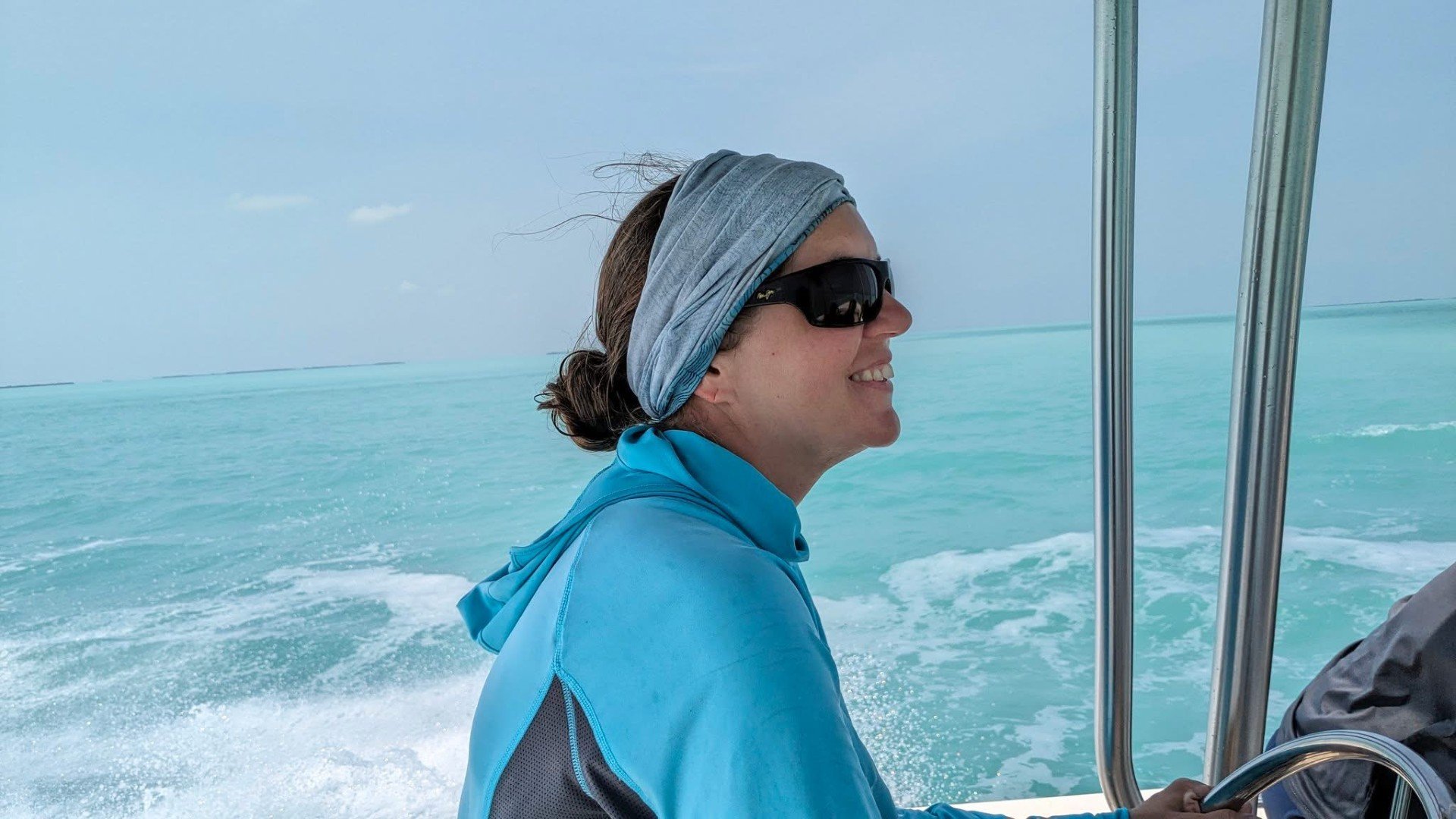
Current Job: Professor, Dept of Biology and Marine Biology, University of North Carolina Wilmington
Current Project: Building eelgrass resilience in East Coast National Parks: Using assisted gene flow to restore & rehabilitate meadows from Maine to North Carolina
State(s) working in: North Carolina
Where are you from: The Eastern Shore of Maryland
What do you think is the main reason we should protect SAV?
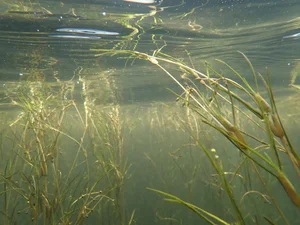
SAV are amazing organisms! Beyond all of the ecosystem services they provide, and all the economic benefits of a healthy SAV community - they are just physiologically impressive. What other plants can grow when completely submerged?!?
How do you feel your research will make a difference in the SAV community?
The overall goal of this research is to help the SAV community restore seagrass meadows that are better able to survive warming waters and other changing environmental conditions. Some seagrass plants are still hanging on, even as meadows decline around them, and that is pretty amazing! What makes those plants different? Do they have heat-tolerant traits that could help us restore more resilient meadows?
We are building on decades of monitoring to identify the best places for seagrass recovery, find genetically appropriate seed sources, and test whether assisted gene flow can improve survival and accelerate adaptation. It is also a huge collaborative effort, with more than 15 universities and partners working across five states and seven National Park Service units. By comparing seagrasses across such a broad range of temperatures and locations, we can use space as a substitute for time and give the SAV community practical tools for making restoration more successful.What is one of your best memories working with SAV?
The first time Dr. Ken Moore, now retired from VIMS, took me out on the York River to establish my first SAV research plot will always be a highlight. Finally getting to snorkel in the same SAV beds I had spent so much time reading about was amazing! I have not looked back since.
What keeps you motivated to keep caring about the future of SAV?
SAV used to be something that very few people paid attention to. Over the course of my career, I have watched the community of scientists, managers, NGOs, educators, and curious members of the public grow tremendously. The new ideas, energy, and perspectives they bring to the table make me hopeful that the future of SAV is in good hands.
More about Jessie’s story
Jessie C. Jarvis, Ph.D., is a Professor in the Department of Biology and Marine Biology at the University of North Carolina Wilmington and principal investigator of the Coastal Plant Ecology Lab. A marine ecologist specializing in seagrasses and other submerged aquatic vegetation, her research examines how environmental conditions influence plant growth, reproduction, survival, resilience, and restoration. Her work integrates long-term ecological monitoring, field and laboratory experiments, restoration science, remote sensing, ecological modeling, and water-quality research to provide useful information for coastal resource managers and policymakers.
Before joining UNCW in 2015, Jarvis worked at James Cook University in Australia, Stockton University, and the U.S. Army Corps of Engineers’ Environmental Laboratory. Her research has included large-scale seagrass restoration in Chesapeake Bay, mapping the effects of dredging on seagrasses along the Great Barrier Reef, and monitoring and restoring seagrass ecosystems throughout coastal North Carolina. She is a former president of both the Atlantic Estuarine Research Society and the World Seagrass Association, co-founder of the East Coast SAV Collaborative, and a recipient of UNCW’s Distinguished Faculty Scholar and Distinguished Scholarly Engagement and Public Service Senior Scholar awards.